
The sky above Estadio Guadalajara had turned the colour of a bruise, deep purple, heavy with the weight of extra time, when Axel Tuanzebe met the ball.
It was not a clean strike. It was not the kind of goal you draw up on a tactics board. A corner whipped in from the left, bodies scrambling in the box, and the ball found Tuanzebe's knee and bounced, slowly, mercifully, over the line.
For a fraction of a second, nobody moved.
Then the DR Congo bench erupted. Players sprinted from the tunnel. Substitutes fell to their knees. And in Kinshasa, in Goma, in Bukavu, in Paris, in London, in Brussels, and in every city on earth where a Congolese family had built a second life far from the one they were forced to leave, people screamed into the night.
DR Congo were going to the World Cup.
For the first time in fifty-two years.
The man who scored that goal, the man whose knee made history on a warm Mexican evening on the 31st of March, 2025, was born in Bunia. He left when he was four years old, carried in his parents' arms away from a country that was consuming itself in blood. He grew up in Rochdale, England, in a house full of relatives, on neighborhood pitches where football was the one language that needed no translation.
He did not choose Congo. Congo chose him back.
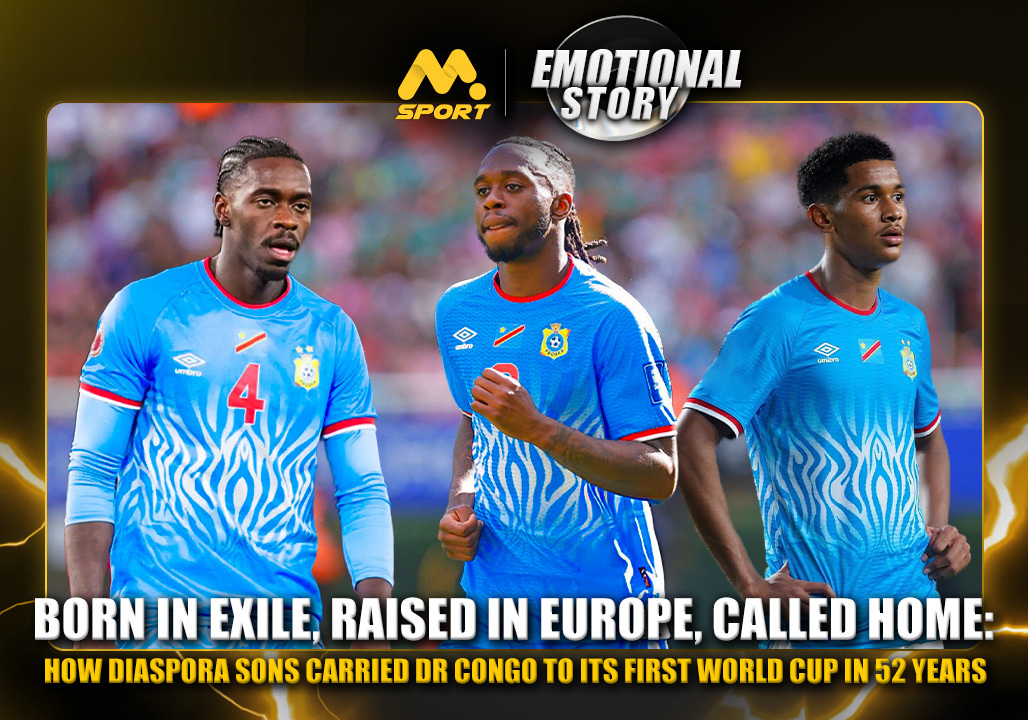
And his story, the story of Tuanzebe, of Aaron Wan-Bissaka, of Senny Mayulu, of a generation born in exile and raised in European suburbs and now wearing the blue of the Leopards, is not simply a football story. It is the story of what happens to a people scattered by war. It is the story of what they carry with them. And it is the story of what calls them home.
The Country That Burned
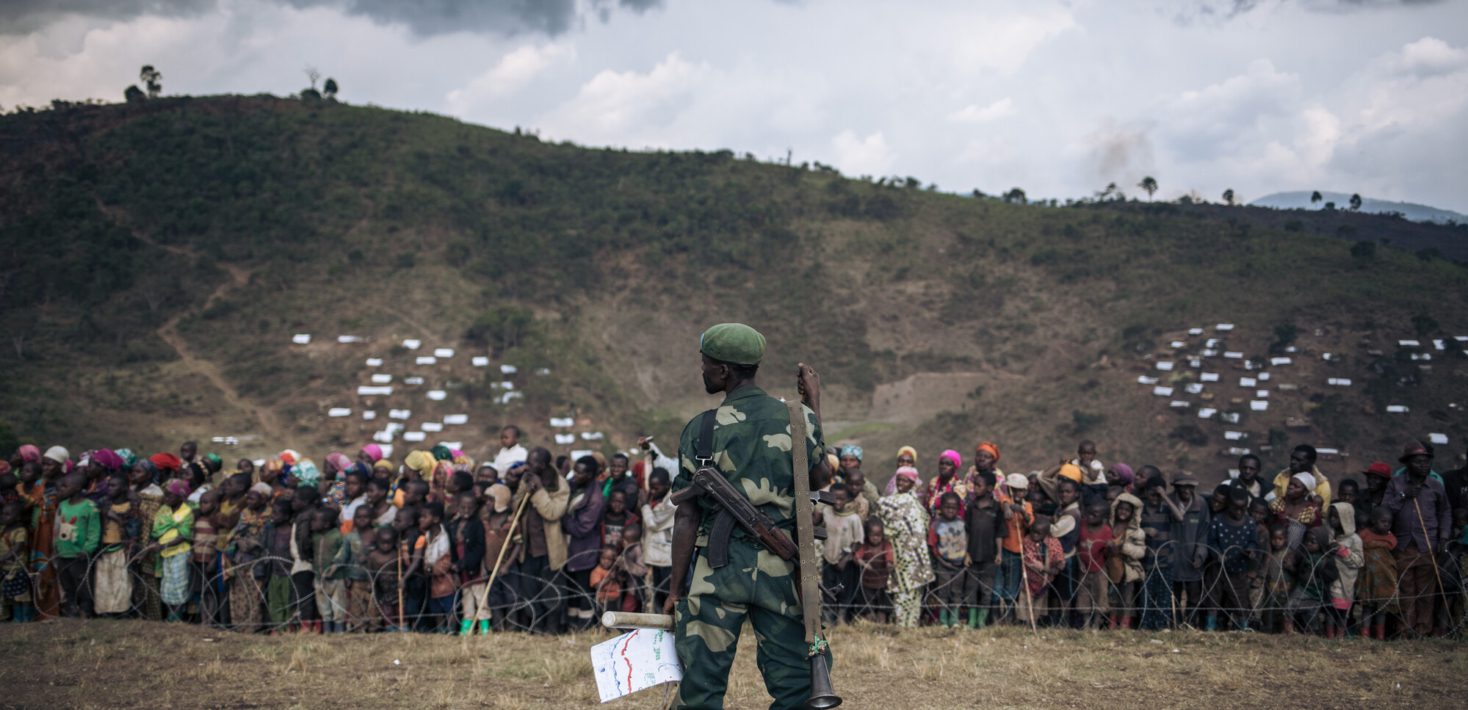
Photo Credit (Getty Images)
To understand why these young men matter, you must first understand what their parents fled.
The Democratic Republic of Congo, a nation the size of Western Europe, crammed with more mineral wealth than most countries can dream of, has spent most of its modern existence being consumed by the ambitions of others. First the Belgians, who reduced it to a private plantation for King Leopold II, whose rubber quotas were enforced with severed hands. Then the decades of Mobutu Sese Seko, the dictator who renamed the country Zaire, renamed himself the Leopard and hollowed out every institution while Swiss banks filled with stolen millions. He ruled for thirty-two years. He wore a leopard-skin hat. He let the roads collapse, the hospitals empty, and the schools rot.
When Mobutu finally fell in 1997, the country did not exhale. It ignited.
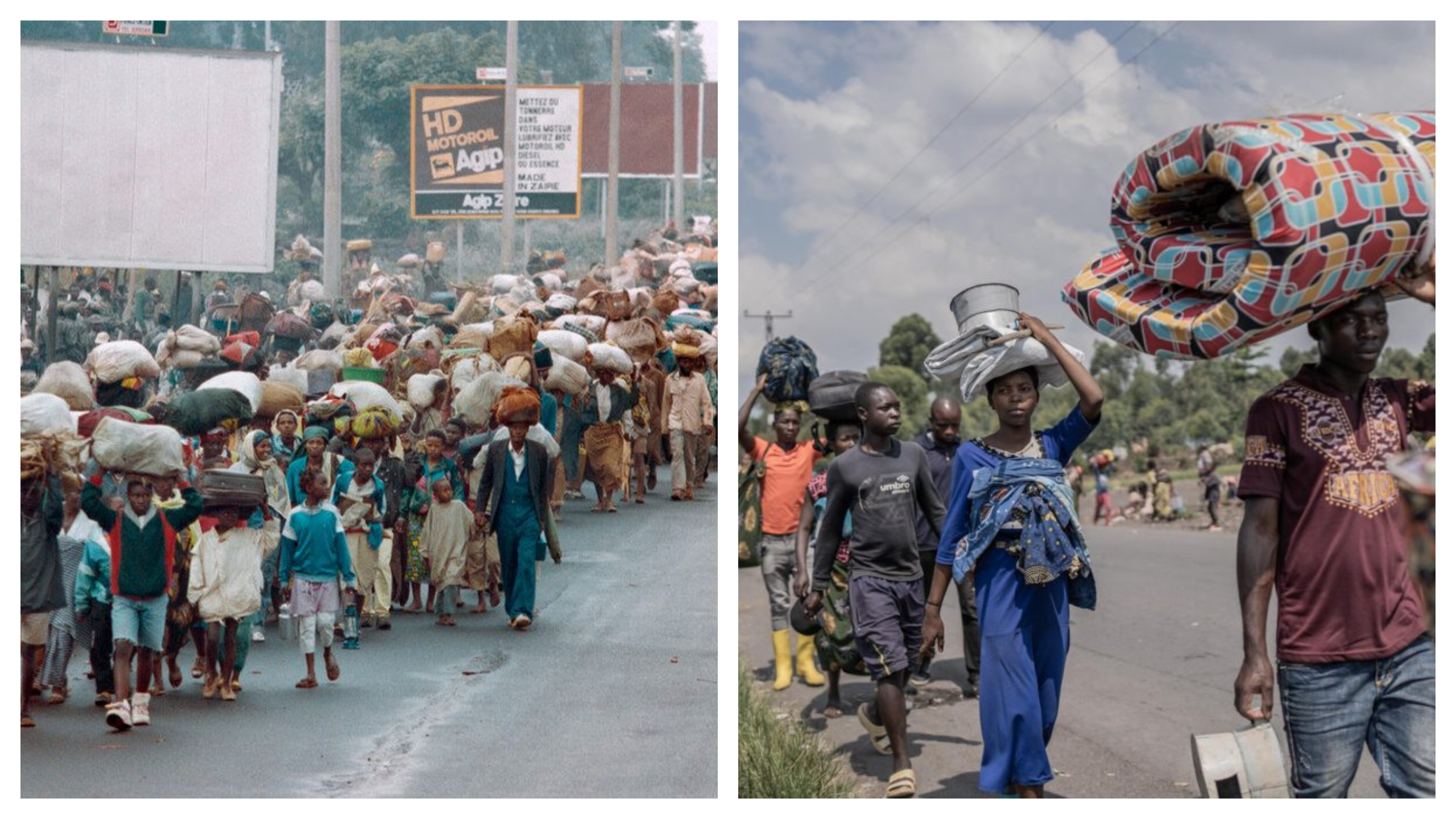
What followed was one of the deadliest conflicts since the Second World War, a catastrophe the world mostly looked away from because it happened in Africa and involved no oil. The First Congo War. The Second Congo War. Militias with names that sounded like bureaucracies carved the east of the country into territories of terror. The Ituri Province, where Axel Tuanzebe's family lived, became a slaughterhouse. In Bunia alone, Hema and Lendu militias massacred each other and everyone between them. Mass graves. Churches burned with people locked inside. Children conscripted. Women used as weapons of war.
Millions died. Millions fled.
They went to Uganda, to Rwanda, and to Tanzania. They went further, to France, to Belgium, to England, to Canada. They went wherever the world would take them. They arrived in European cities with nothing except their children and the memory of what home had once been: the curve of the Congo River, the smell of rain on red earth, the sound of Lingala in the market, the particular blue of the sky over Kinshasa at dusk.
They built new lives in cramped apartments in Seine-Saint-Denis and Croydon and Rochdale. They worked night shifts and weekend jobs. They sent money home when home still existed to send money to. And they raised their children in two worlds simultaneously, teaching them the customs of a country those children had never seen, while those children learned to survive and then to thrive in cities that had never heard of Bunia or Goma or Bukavu.
This is the generation that put on the blue jersey.
The Boy from Bunia
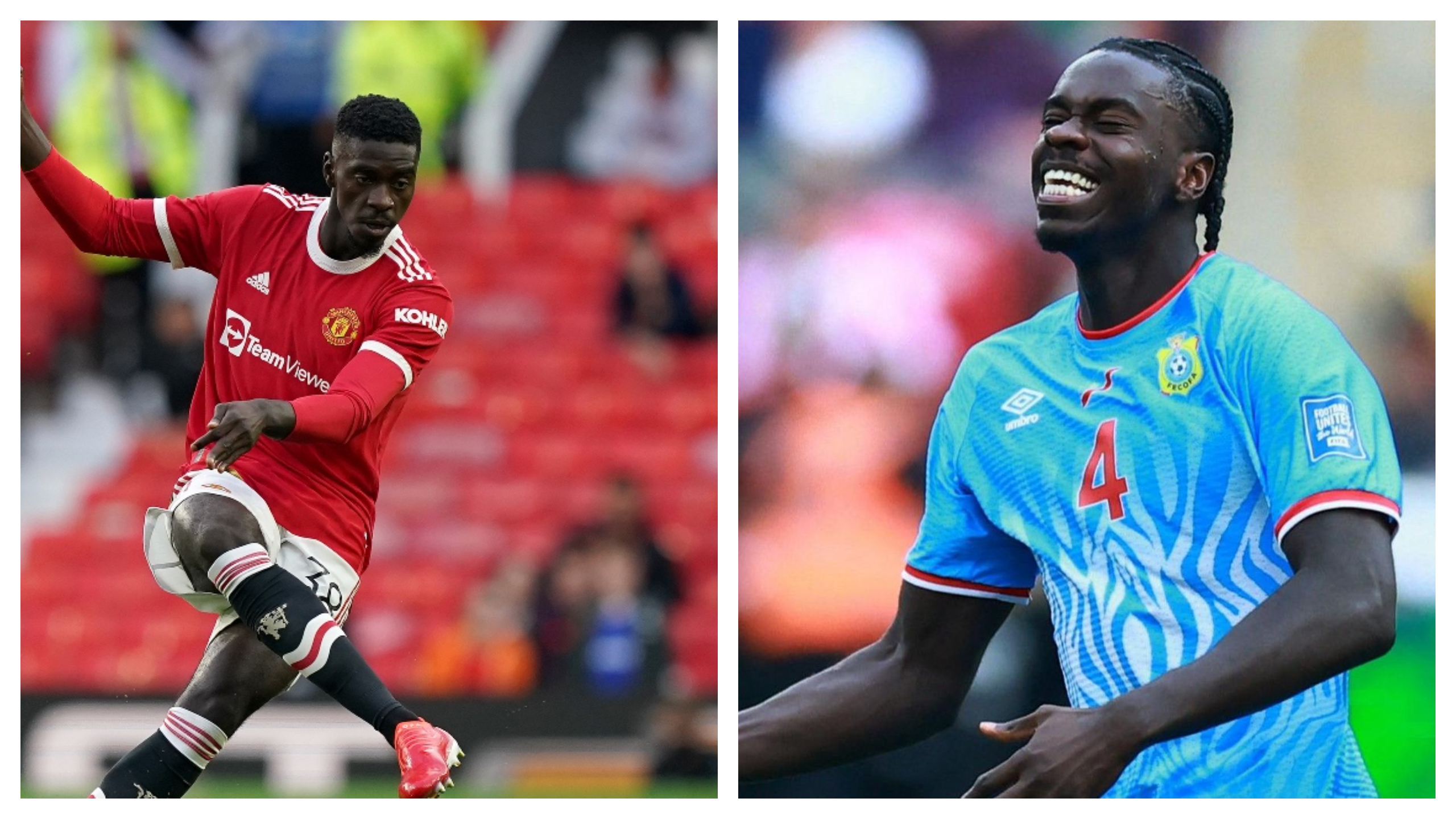
Axel Tuanzebe remembers almost nothing of Congo. He was four when his family left, escaping the Second Congo War with whatever they could carry. They landed in England. They settled in Rochdale, in Greater Manchester, where a Congolese community had quietly established itself in the terraced streets and housing estates on the edge of the city.
The family home was full, grandparents, parents, siblings, aunts — the kind of household that forms when people are displaced and hold onto each other the only way they can, which is by staying close. Tuanzebe has spoken about it with warmth rather than hardship. They had what they needed. They had each other.
What he found, on the small pitches of Rochdale, was football.
He spoke no English when he arrived. Football did not care. Football was the same game in any language, the same geometry, the same hunger, the same feeling of belonging that comes when you are good at something that everyone around you loves. He learned English through the game. He learned who he was through the game. By the time he was eight years old, Manchester United's scouts had seen enough.
He rose through the academy quietly, no fanfare, no hype, just the steady accumulation of quality that eventually becomes impossible to ignore. He captained the youth team to the English National Schools Cup final at Stamford Bridge. He won the Jimmy Murphy Young Player of the Year award at United. He represented England at under-19, under-20, and under-21 level. He shackled Kylian Mbappé in a European night that had Old Trafford believing he was ready for everything.
He was also, all this time, Congolese.
The identity never left him. It sat underneath the Manchester United badge, underneath the England youth shirt, underneath every interview conducted in English in a city that had taken him in. When DR Congo came calling in 2024, inviting him to switch allegiance to the senior team, he did not hesitate for long.
"Moving to another country, with different customs and culture, is always tough. But I made a lot of friends playing football, built connections with different communities. Football gave me everything."
On the 31st of March 2025, football gave him, and through him, a nation, something more.
His knee deflected a corner into the net in the 107th minute of a World Cup playoff against Jamaica in Guadalajara. DR Congo won one-nil. For the first time since 1974, the Leopards were going to the World Cup. Tuanzebe sank to his knees on the pitch, his hands covering his face, his shoulders shaking. In the streets of Kinshasa, in the rain, people danced until morning.
The boy from Bunia had brought them home.
The Son Who Chose
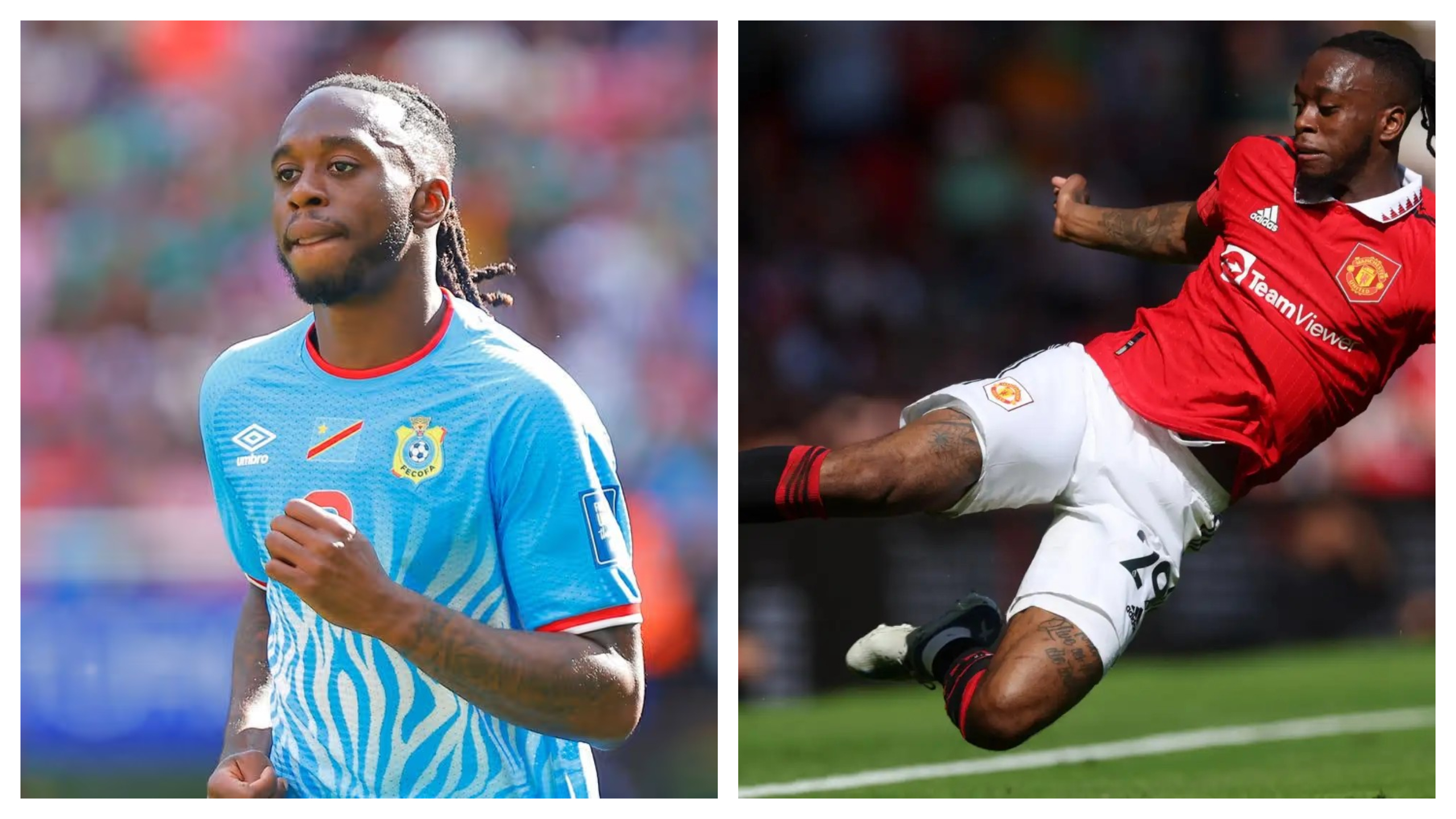
Aaron Wan-Bissaka was not born in exile. He was born in Croydon.
But Croydon was a Congolese house. His parents had made the journey before him, from the Democratic Republic of Congo to South London, carrying the same thing all migrants carry, which is the hope that somewhere else might be safer, might be better, might let their children become something that the country they loved could not yet offer. They raised their son in Lingala and in London. They cooked Congolese food in a Croydon kitchen. They built a life with one foot on each side of the water.
Wan-Bissaka grew up at Crystal Palace's academy from the age of eleven. He was a winger who became a full-back, an attacker who discovered that stopping people was a gift rarer than scoring. By 2019, Manchester United paid fifty million pounds for him. He was twenty-one years old, uncapped at senior level, and he was being described by Jamie Carragher as the best one-on-one defender in the world at his position.
He also spent six years in international limbo.
England called him up once in 2019. He withdrew injured. Gareth Southgate looked at his squad and saw Kyle Walker and Trent Alexander-Arnold and Reece James and Kieran Trippier, and every time the question of Wan-Bissaka came up, the answer was the same: there are players ahead of him. Southgate once said, publicly, that it was an area of the pitch where England were blessed. The words landed like a door closing.
Meanwhile, DR Congo had been asking. They had always been asking. At seventeen, Wan-Bissaka had played once for the Congo under-20s before switching to England's youth teams. He had said, in that teenager's way, that he would never leave, that he would accept the country where he came from. Then later, chasing the dream: the aim was England. For years he sat between two loyalties, hoping England would make the decision easier by choosing him.
They never did.
In August 2025, FIFA approved his switch. In September 2025, he pulled on the blue of the Leopards and played ninety minutes in a World Cup qualifier against South Sudan. He was twenty-seven years old. He had waited long enough to know that waiting was over.
"It's my country. Where my parents come from. I grew up in a Congolese household. I'm proud to represent it. I wanted to join when I was ready. Only I know when I am ready."
There was no bitterness in the statement. Only clarity. He had spent years trying to become English enough to play for England, and in the end he discovered that what he had always been was enough. His parents' country was enough. It had always been enough. It just took football to make him say it out loud.
He was part of the squad that beat Nigeria, that made it through the playoffs, that secured the place in the World Cup. He will be in the tunnel in 2026, in Group K, against Colombia and Portugal and Uzbekistan, wearing the jersey his parents' generation never got to see their children wear.
The Star They Are Still Calling
Not all of them came the same way.
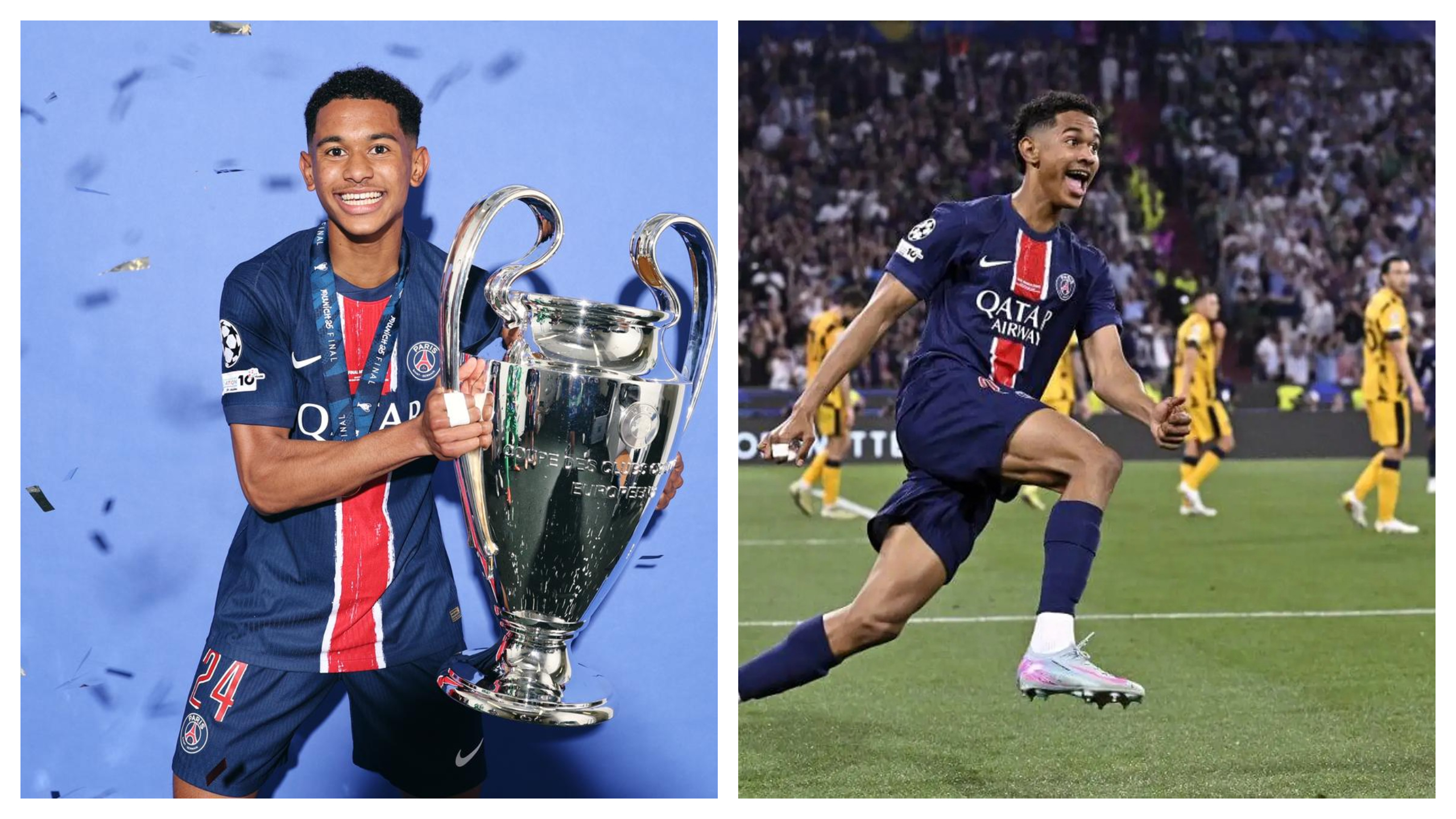
Senny Mayulu did not flee a war. He was born on the 17th of May 2006 in Le Blanc-Mesnil, a commune in Seine-Saint-Denis, the northern suburbs of Paris where much of France's African diaspora settled, where the tower blocks rise and the football cages never empty and boys discover early that their feet might take them somewhere their circumstances cannot.
His father is from the Democratic Republic of Congo. His mother is French. He grew up with both, shaped by both, carrying both in the way children of two worlds always carry them, not as a burden, but as a fullness.
His grandfather, it is said, was a professional footballer in Kinshasa. The game runs in the blood across generations and oceans.
At five years old, Mayulu was kicking a ball in the streets of Le Blanc-Mesnil. By thirteen he was at PSG's academy, where coaches noticed something beyond technical ability, a calmness, an intelligence, a willingness to take responsibility in moments when boys that age usually hide. In October 2023, he struck a thunderous effort from distance to give PSG's under-19s a victory over AC Milan in the UEFA Youth League. Le Parisien called it superb. Luis Enrique called him up to the first team weeks later.
And on the 31st of May 2025, Senny Mayulu, nineteen years old, came off the bench in the Champions League final against Inter Milan and scored the fifth goal in a five-nil victory. He became the third youngest player in history to score in a Champions League final. He stood on the pitch in Munich's Allianz Arena and said, in the way only nineteen-year-olds can say things:
"I cannot describe this feeling. We are making history. It is the dream of a child."
He had represented France at youth level through every age group. France assumed he was theirs.
Then DR Congo called. And Senny Mayulu listened to something older than football.
He has pledged his international future to the Leopards, eligible through his father's heritage, carrying Kinshasa in his blood even though he has only ever known Paris. He is expected to be at the 2026 World Cup, the youngest and brightest of the diaspora sons, the living proof that the chain connecting Congo to its scattered children has not broken, that it has, if anything, grown stronger with each generation born in exile.
What the Scouts Built, and What the War Made
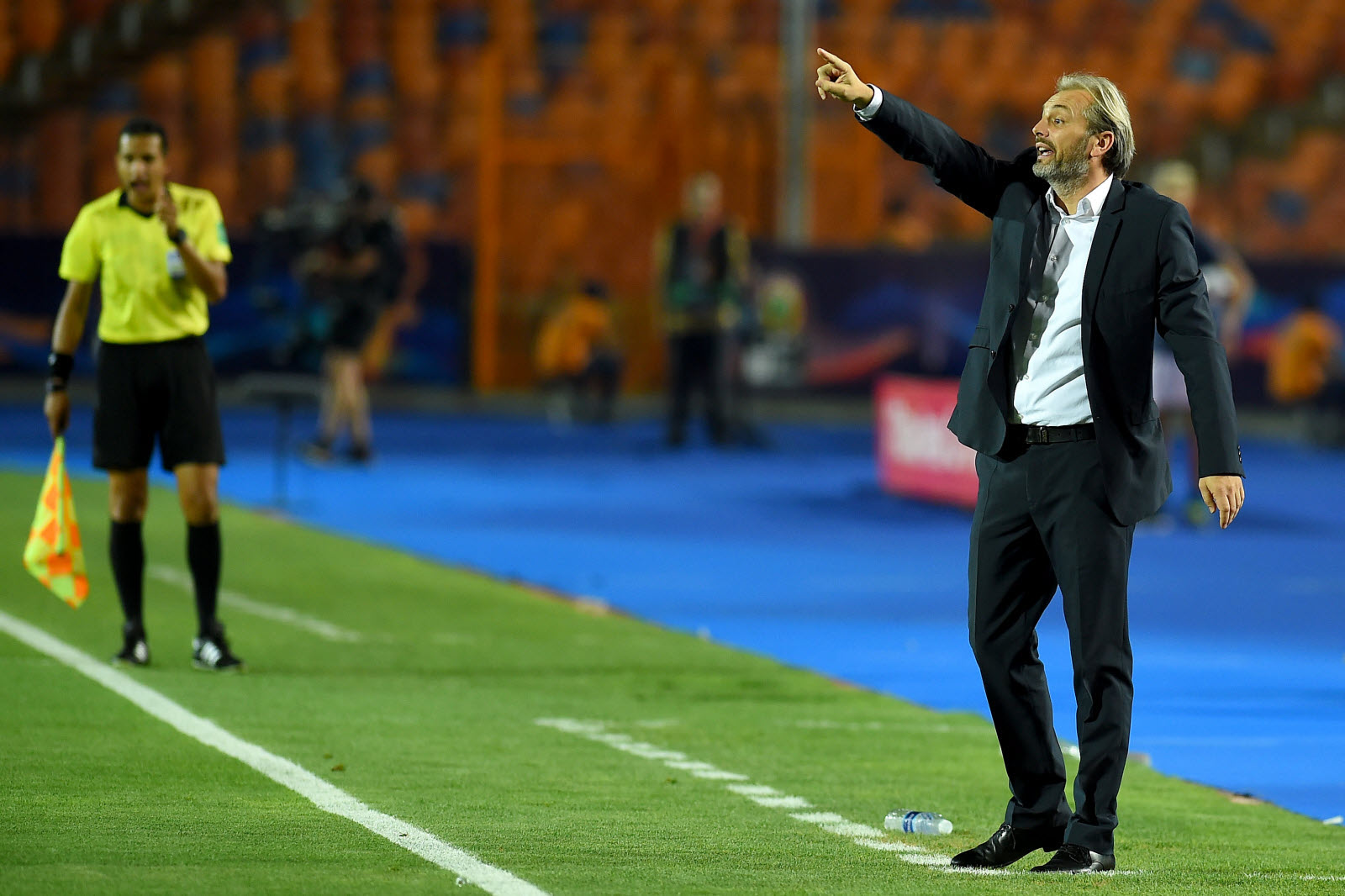
Photo Credit ( CAF Online)
Coach Sébastien Desabre is French. He is not Congolese. He did not flee any war.
But he understood something that previous generations of Congolese football administrators did not fully grasp: that the war scattered the talent as well as the people. That when the Congolese diaspora settled in France and Belgium and England, it brought with it the genetic raw material of a football nation, and that raw material was growing up on European pitches, coached by European academies, eating European diets, sleeping in dry beds, and training with the kind of infrastructure that African football associations can only dream of.
He went to get them.
Of DR Congo's 2025 World Cup squad, ten players were born in France. Five were born in Belgium. Two in Switzerland. One in England. Only a handful had spent significant time playing senior football on Congolese soil. The squad read like a map of displacement, every name a dot on a diaspora chart stretching from Kinshasa to Croydon to Le Blanc-Mesnil to Lausanne.
Nigeria protested. They filed with FIFA, arguing that some players had not legally renounced their foreign citizenships as required by Congolese domestic law. The debate was messy and ultimately FIFA confirmed DR Congo's qualification. But the controversy itself revealed something real: the world was not prepared for what this squad represented. People were still operating with old definitions of nationality, old assumptions about who belongs where, old frameworks built for a time before wars scattered entire peoples across continents.
Wan-Bissaka held an English passport. Tuanzebe had been an England youth international. Mayulu had been French in every institutional sense. And yet something, something older and deeper and less legible than a passport, pulled them all toward the same jersey.
The Congolese sports minister challenged Ronaldo before the Portugal game at the World Cup, playfully, joyfully: You will cry in front of us. It was the confidence of a nation that had been invisible for fifty-two years and was now arriving not apologetically but on its own terms, with Premier League defenders and Champions League scorers and the fury of a people who had been through too much to be intimidated by anyone.
What They Are Playing For
In Goma, on the night of the 31st of March, a fan named Freddy told a journalist that it had been a long time since they had smiled. Goma sits in the eastern Congo, near the Rwandan border, an epicentre of decades of conflict. The M23 rebel group controls territory nearby. People do not move freely at night. The curfew is enforced not by police but by fear.
And yet when the final whistle blew in Guadalajara, people danced. Freddy said he watched the match at home, because moving at night is dangerous. He said that everyone around him was watching too, in their houses, in the dark. And when the goal went in, the walls between houses seemed to disappear, because the sound of everyone's joy was the same sound, and it filled the night, and for a few hours Goma was not a city under threat. It was a city celebrating.
President Tshisekedi ran into the streets of Kinshasa and hugged supporters in the rain. The government declared a public holiday. Even the M23 rebel spokesman posted his joy publicly. A qualification for the World Cup had, for one improbable moment, dissolved a conflict that years of diplomacy had not.
This is what football can do. This is what it cannot sustain. But the moment was real.
And at the centre of that moment, the goal, the knee, the 107th minute, was a man born in Bunia who left at four and grew up in Rochdale and spent twenty years becoming the kind of player who can score in a World Cup playoff. His parents fled so he could exist. He chose so they could be honoured. The geometry of that exchange — what the parents gave, what the son returned, is not something that fits neatly into a match report.
DR Congo will face Colombia. They will face Portugal. They will face Uzbekistan. They will almost certainly be outspent, outranked, and given little chance by the analysts and the betting markets and the football world that still struggles to take African football seriously on its own terms.
But they will have Tuanzebe, who survived a war he was too young to remember.
They will have Wan-Bissaka, who waited for England and found that what he had always wanted was somewhere else.
They will have Mayulu, nineteen years old, Congolese in his blood and Parisian in his bones, carrying a grandfather's football legacy across an ocean without ever having learned to swim.
They will have a squad born in exile, raised in European suburbs, in French housing estates and English terraced streets and Belgian academies, shaped by a diaspora's determination to make something out of displacement.
They Are the Leopards of the Lost Generation. They Are Going Home.
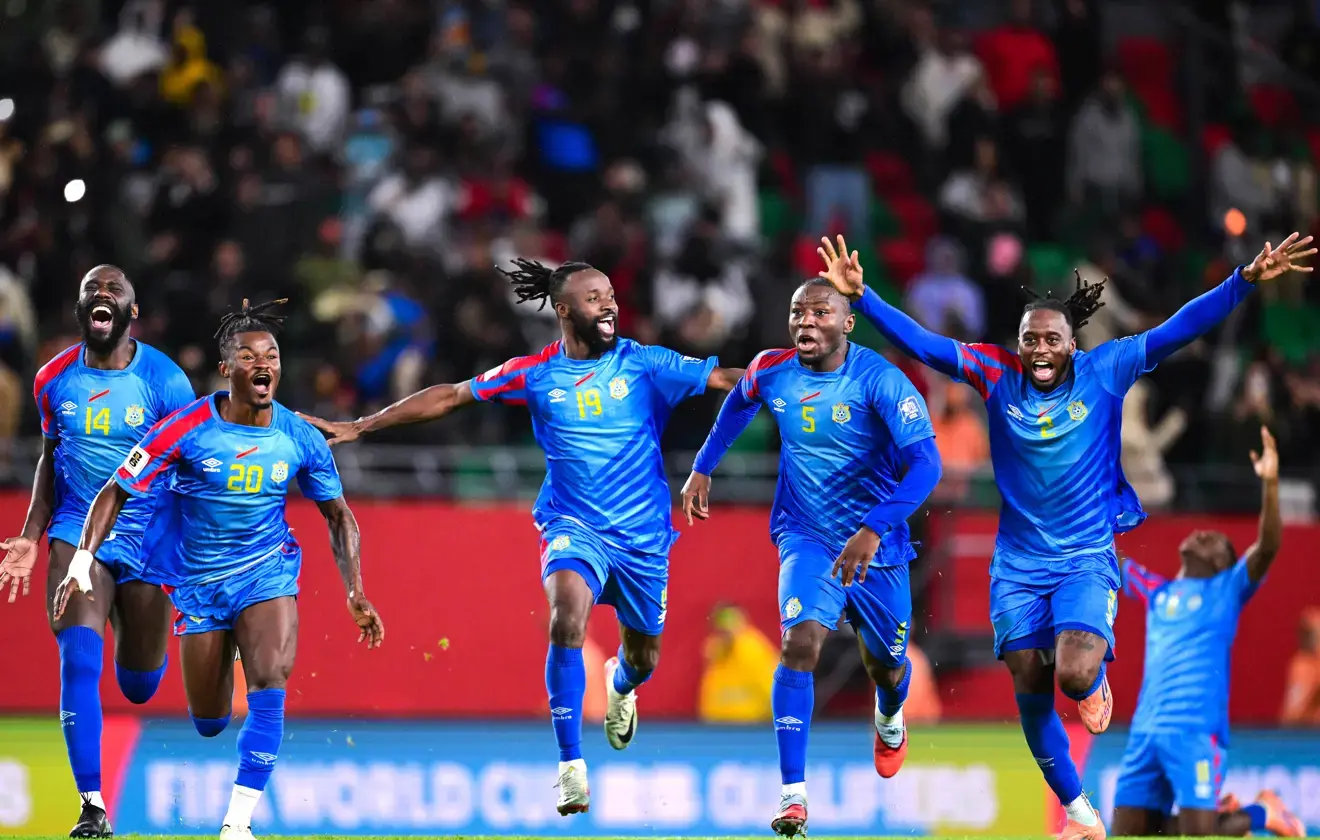
Photo Credit ( Getty Images)