

Xabi Alonso has taken charge of three competitive Chelsea matches and won all three. His team have scored nine goals, progressed in the Carabao Cup and collected six points from their opening two Premier League fixtures.
The opening week has also shown that Chelsea can win in different ways. They attacked spaces against Fulham, patiently worked through Luton’s low block and used a direct transition plan to score four times against Brighton.
There are still details for Alonso and his players to refine, particularly when protecting an advantage. That is expected three matches into a new managerial project. More importantly, Chelsea's players are learning while winning.
The 4-3 victory over Brighton was the most entertaining performance so far, but it also made more sense when viewed alongside the two matches that came before it.
Three Matches, Three Different Tests

Image credit (Chelsea FC)
The results are straightforward: Fulham 2-3 Chelsea, Chelsea 2-0 Luton and Chelsea 4-3 Brighton. Three matches. Three wins. Nine goals.
Six Chelsea players have already scored under Alonso. Joao Pedro and Cole Palmer have two each, while Morgan Rogers, Danny Welbeck, Romeo Lavia and Pedro Neto have one. The remaining goal was an own goal forced by Estevao against Luton.
The variety is encouraging. Chelsea are not depending on one player for goals. Palmer and Rogers can create between the lines, Joao Pedro can stretch a defence or receive directly, and the wing-backs are being encouraged to arrive in attacking positions.
Alonso has mainly used the 3-4-2-1 shape associated with his Bayer Leverkusen team, but Chelsea have not approached every opponent in the same way. The structure has remained familiar while the attacking method has changed according to the challenge.
Fulham: The Attack Clicks Immediately

Image credit (Chelsea FC)
Alonso’s first competitive match began with a goal after 32 seconds. Palmer flicked the ball through, Joao Pedro ran beyond Fulham’s defence and lifted his finish over Bernd Leno. It was a simple, fast attack and an immediate example of the threat Chelsea now carry.
Fulham equalised through Josh King, but Chelsea responded well. Rogers restored the lead before half-time and Palmer made it 3-1 early in the second half. Alonso’s starting front three had all scored in his first match.
Gonzalo García reduced the advantage five minutes later and ensured the closing stages remained competitive. Chelsea adjusted, used their substitutes and successfully protected the 3-2 lead.
The visitors finished with 37 per cent possession, but they did not need long spells on the ball to create chances. Their forward players combined quickly, attacked the spaces behind Fulham’s defence and showed the individual quality required to decide a close derby.
It was not a completely comfortable introduction, but it demonstrated two useful qualities: Chelsea could score through different players and respond whenever Fulham changed the momentum.
Luton: Patience and Control at Stamford Bridge

Image credit (Chelsea FC)
Four days later, Luton presented a completely different challenge. The League One side defended in a compact 5-4-1 and left very little space behind. Chelsea could not rely on transitions, so they had to keep possession and patiently move the defensive block.
They finished with 65 per cent possession, registered 26 shots and recorded 45 touches inside the Luton penalty area. At the other end, Luton were limited to one shot on target. Palmer was denied several times, Rogers hit the crossbar and Jamie Gittens struck the post late on.
The breakthrough arrived five minutes after half-time when Welbeck headed in Malo Gusto’s cross on his debut. Estevao then forced the second goal, with his low shot being diverted into the net by Hakeem Odoffin.
The 2-0 victory showed another side of Alonso’s approach. Chelsea can attack quickly when space is available, but they can also dominate possession and remain patient against a team defending close to its own penalty area.
It was also a productive night for the wider squad. Mike Penders, Valentin Barco and Welbeck started on their debuts, while Estevao was involved in both goals. Alonso rotated his team, gave new players an opportunity and still produced a controlled performance.
Brighton: A Direct Plan Delivers Four Goals

Image credit (Chelsea FC)
Brighton was Alonso’s first Premier League match at Stamford Bridge, and Chelsea needed only four minutes to score. Lavia reacted first after a corner, Neto added the second following a powerful Rogers run, and Joao Pedro made it 3-0 after 32 minutes.
Chelsea finished with only 26 per cent possession, attempted 225 passes and completed 152. Those were their lowest Premier League figures since Opta began collecting the data in 2003/04, but the numbers reflected a deliberate tactical choice rather than a lack of attacking threat.
Alonso allowed Brighton to advance and asked Chelsea to use the space left behind. Emiliano Martínez attempted 38 passes on his debut and only one was short. Eight went towards Joao Pedro. Chelsea were using their goalkeeper to move the ball forward quickly and directly.
The plan was particularly effective during the opening half-hour. Chelsea had just 30 per cent possession at half-time but created the better opportunities, and all three of their opening goals came from inside ten yards.
Brighton responded through Malick Yalcouyé before the interval and reduced the deficit again when Joao Pedro diverted Pascal Gross’s cross into his own net. Palmer then supplied another important moment, collecting João Pedro’s lay-off and curling Chelsea’s fourth goal beyond Bart Verbruggen.
Alonso moved his team into a 5-4-1 during the closing stages to protect the advantage. Gross headed in Brighton’s third with the final action, but Chelsea had done enough to complete a 4-3 victory and make it three wins in seven days.
Alonso acknowledged afterwards that his players had dropped deeper than intended after establishing their lead. That self-assessment points towards the next part of Chelsea’s development: maintaining the same confidence and positioning throughout the match, regardless of the score.
What Comes Next
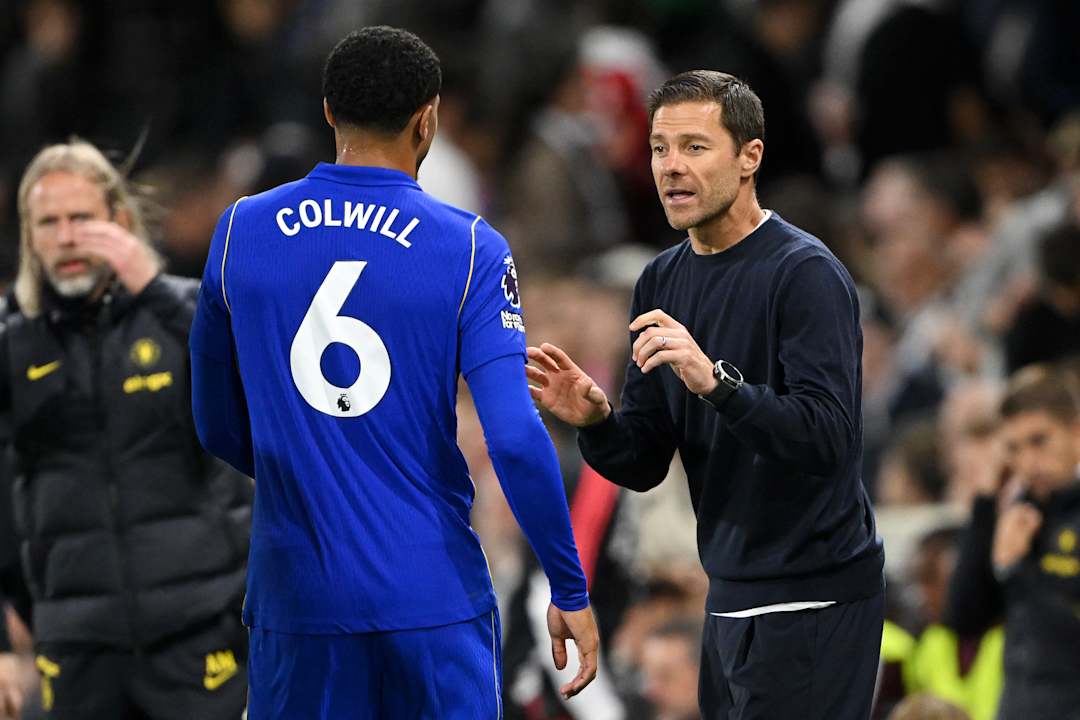
Image credit (Chelsea FC)
Three matches are not enough to define an entire season, but the early signs are promising. Alonso’s tactical ideas are already visible, and Chelsea have shown they can adapt without losing their attacking identity.
The relationships between Palmer, Rogers and Joao Pedro have developed quickly. The wing-backs are contributing in advanced areas, while players such as Estevao and Welbeck have made an impact when given opportunities.
The next stage is turning strong positions into more comfortable victories. Chelsea have protected their leads successfully against Fulham and Brighton, but Alonso will want his team to manage those periods with greater possession and spend less time defending close to their own goal.
That improvement does not require Chelsea to abandon the speed and ambition that have made them exciting. It is about recognising when to attack directly, when to keep the ball and when to reduce the tempo.
The next test comes against Arsenal at the Emirates. It will offer another opportunity to assess Alonso’s tactical flexibility and the progress of a team still adjusting to a new manager and several new players.
Three victories and nine goals represent an excellent beginning. Chelsea are creating chances, sharing the goals and finding solutions to different opponents. Alonso does not have a finished team yet, but he has one learning quickly and winning while it does so.